 GigaLaser
Blog · Conditions
Combining Photobiomodulation and HBOT for Sports Recovery in Dublin
GigaLaser red light laser therapy and hyperbaric oxygen therapy for sports recovery in Dublin: how PBM and HBOT may complement each other for athletes, and what to expect.
*Reading time: about 5 minutes*
If you train hard, compete, or simply refuse to let an old injury keep you on the sidelines, you have probably looked at every recovery tool available. Ice baths, compression, massage, supplements, and more. Two therapies that keep coming up in sports recovery conversations are photobiomodulation (PBM) and hyperbaric oxygen therapy (HBOT). Both are used in professional sport. Both have a plausible biological story. And at GigaLaser.ie in Dublin, we are often asked whether combining them makes sense.
Here is the honest version: what each therapy does, how they may complement each other, where the evidence is solid, and where it is still emerging.
What is photobiomodulation, the GigaLaser way?
Photobiomodulation, also called red light laser therapy or low level laser therapy (LLLT), uses specific wavelengths of red and near-infrared light to support the body's natural recovery processes. It is not a surgical laser. There is no cutting, no heat damage, and no downtime. Most people find a session warm and relaxing.
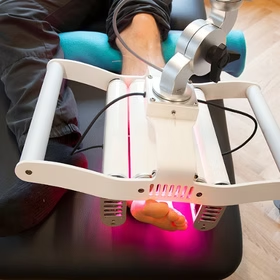
The GigaLaser delivers red (650nm) and near-infrared (830nm) light over a large treatment area at once. This matters for athletes because muscles, tendons, and joints are not single points. A hamstring, quadriceps group, shoulder complex, or lower back can be treated in one hands-free session, rather than tracing a small handheld probe point by point.
What is HBOT?
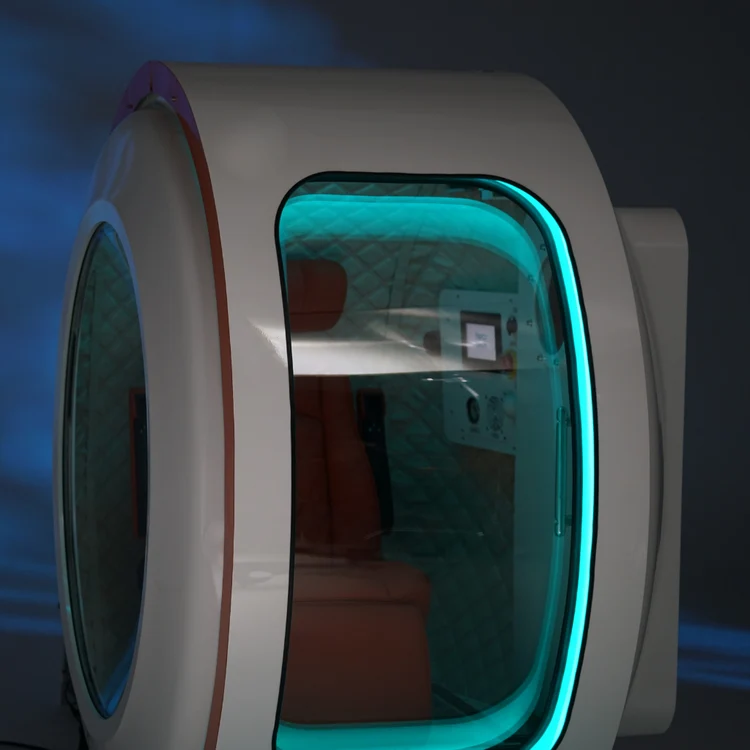
Hyperbaric oxygen therapy (HBOT) involves breathing pure oxygen in a pressurised chamber. The pressure allows more oxygen to dissolve into the blood plasma, which can then reach tissues more efficiently. HBOT is an established medical treatment for certain conditions, and it is also used as a recovery modality to support oxygen delivery and tissue repair after intense training or injury.
Why athletes consider combining PBM and HBOT
The two therapies work on different parts of the same recovery puzzle.
PBM is thought to support mitochondrial function, local circulation, and the cellular processes involved in muscle repair and inflammation resolution. It acts at the tissue level where you place the light.
HBOT works on the oxygen delivery side of the equation, increasing the amount of oxygen available to cells throughout the body under pressure.
The idea behind combining them is straightforward: PBM may help the cells in a sore muscle or tendon respond better, while HBOT may improve the oxygen environment those cells are working in.
What the research says
PBM for sports recovery
PBM has some of the better research support among recovery technologies for athletes. Randomised trials and reviews have looked at delayed-onset muscle soreness (DOMS), muscle fatigue, and return to play after soft tissue injury. The general pattern is that PBM, when delivered at an adequate dose, is associated with reduced muscle soreness, less strength loss, and faster recovery markers compared with sham or no treatment.
HBOT for sports recovery
HBOT is well established in clinical medicine for specific indications. For sports recovery, the research is more mixed and less definitive. Some studies suggest athletes report less fatigue and faster recovery after HBOT sessions, but the evidence is not as consistent as it is for PBM. Much of its use in sport remains practice-based rather than strongly evidence-based.
PBM plus HBOT
There is limited high-quality research specifically on the combination of PBM and HBOT for sports recovery. So we would be misleading you if we claimed a proven synergy. What we can say is that the mechanisms are biologically plausible, both are used in elite sport, and they are generally considered compatible when administered by trained practitioners.
What to expect from a combined approach
If you are an athlete considering this in Dublin, here is what a realistic plan looks like:
- PBM sessions on the GigaLaser target specific areas, such as the legs after a heavy run, the shoulders after throwing, or the lower back after lifting. Sessions are contact-free and painless.
- HBOT sessions are delivered in a chamber, usually over a set course, and focus on systemic oxygen support.
- Timing matters. Some protocols schedule them on the same day with recovery time between them, others alternate days. The right schedule depends on your training load, injury status, and goals.
- Neither is a magic fix. Sleep, nutrition, load management, and any physio or medical care remain the foundation.
Who it may suit
Combining PBM and HBOT may be worth exploring if you:
- Train or compete regularly and want to recover faster between sessions
- Have a recurring soft tissue issue that is slow to settle
- Are preparing for a competition block or returning from injury
- Want a non-invasive, drug-free recovery option alongside your existing care
It is not right for everyone. Some medical conditions make HBOT unsuitable, and PBM needs to be screened for certain situations. We will always check this before starting.
Where to access PBM in Dublin
GigaLaser.ie is the home of Ireland's only GigaLaser, operated in partnership with Luma Health in Sandyford, Dublin 18, with free parking on-site. We offer no pressure consultations for athletes, coaches, and anyone who wants to understand whether PBM is a sensible addition to their recovery plan.
HBOT is not available at every clinic, so we will be transparent about where you can access it locally if you want to combine the two.
Research and further reading
- Low level laser therapy for sports injuries and recovery: an overview on PubMed
- Hyperbaric oxygen therapy in sports medicine: an overview on PubMed
- World Association for Photobiomodulation Therapy (WALT), dosage recommendations. View the recommendations
Related reading
- Red light laser therapy for neck pain: an honest look at the evidence
- Red light laser therapy for lower back pain: what the research says
- Red light laser therapy for knee osteoarthritis: why the dose decides the result
- GigaLaser for sports recovery
*This article is for general information only and is not medical advice. PBM and HBOT are complementary approaches and are not substitutes for assessment and care from your GP, sports doctor, or qualified specialist. Always consult a healthcare professional before starting new recovery therapies, especially if you have an existing medical condition.*
FAQ
Frequently asked questions
What is photobiomodulation for sports recovery?+
Photobiomodulation, or PBM, uses red and near-infrared light to support cellular recovery, local circulation, and the natural processes involved in muscle repair and reducing soreness after training.
What is HBOT and how does it help athletes?+
Hyperbaric oxygen therapy involves breathing pure oxygen in a pressurised chamber. It may improve oxygen delivery to tissues, which some athletes use to support recovery after intense training or injury.
Can PBM and HBOT be combined for sports recovery?+
They are generally considered compatible and are used together in some high-performance settings, but high-quality research specifically on the combination is limited. The mechanisms are plausible, but it is not a proven synergy.
How many sessions are needed for athletes?+
Effects are cumulative. Most athletes use PBM and HBOT as part of a structured recovery block, often over several weeks, rather than relying on a single session.
Is PBM and HBOT suitable for amateur athletes?+
It may be suitable for many athletes, but it is not right for everyone. HBOT has medical contraindications, and PBM needs screening for certain conditions. Always consult a qualified practitioner first.
Next step
Talk to us about your pain
The first step is a conversation, not a commitment. Message us on WhatsApp and we respond within 15 minutes.
Chat on WhatsApp