 GigaLaser
Blog · Conditions
Laser Therapy for Back & Neck Pain: An Honest Look at What It Can (and Can't) Do
GigaLaser red light laser therapy for back and neck pain in Ireland: an honest look at what the research shows, why treatment dose matters and what to realistically expect.
Reading time: about 5 minutes
If you have been living with back or neck pain that just will not settle, the kind that lingers even after scans come back "normal", you have probably tried a lot of things. Painkillers that dull it but do not fix it. Stretches that help for an hour. Advice to "just rest it" that never quite works.
So when you hear about laser therapy, it is fair to be both curious and a little sceptical. Here at GigaLaser.ie, we would rather give you the honest version than the sales version, because the honest version is genuinely encouraging, and it is the one that helps you decide if this is right for you.
First, what is it?
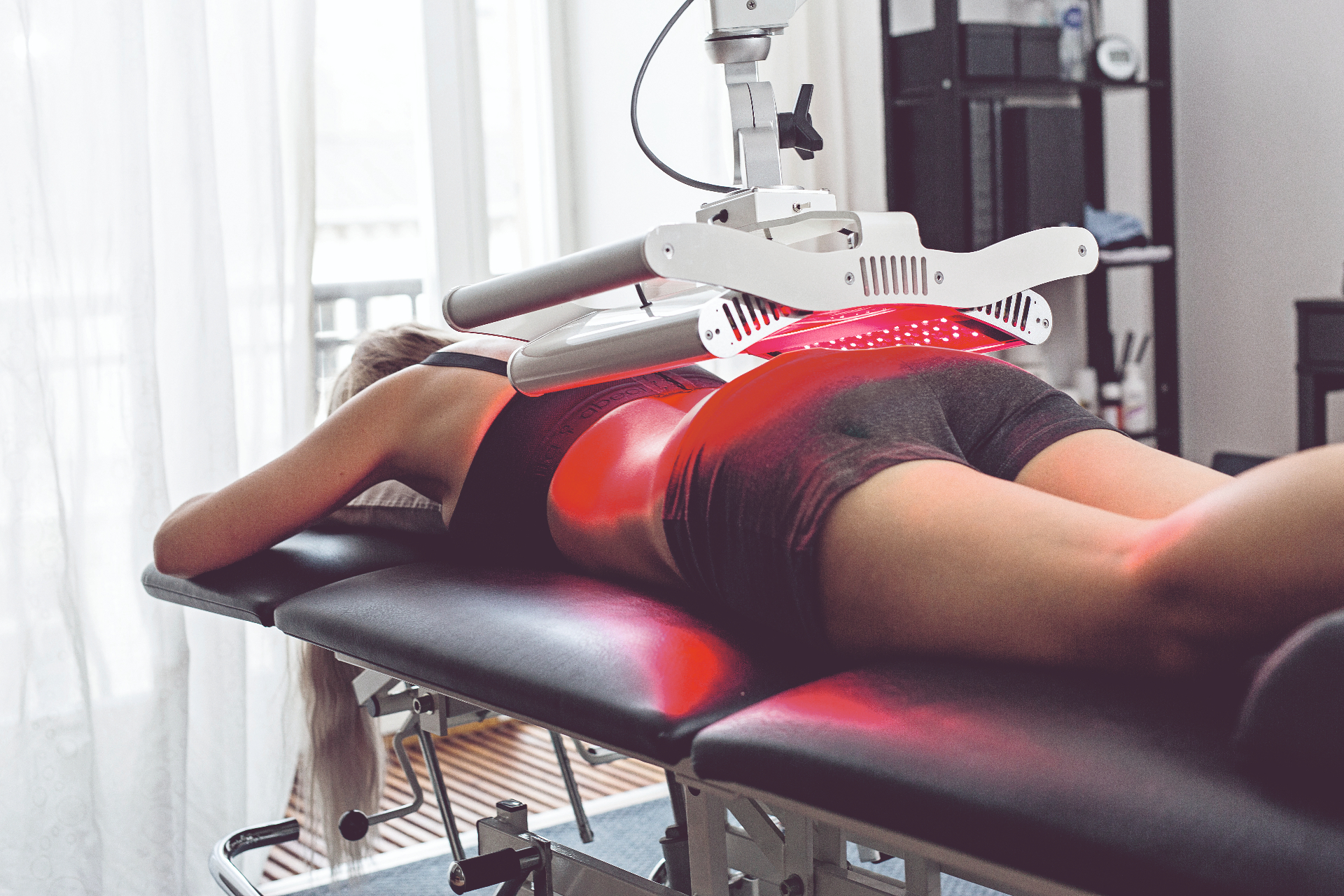
Laser therapy, more properly called photobiomodulation (PBM) or low level laser therapy (LLLT), uses specific wavelengths of red and near-infrared light to support the body's own repair processes. It is not the kind of laser used in surgery. There is no cutting, no heat damage, and no downtime. Most people describe a session as gentle, warm and relaxing.
The GigaLaser system we use delivers both red (650nm) and near-infrared (830nm) light across a large treatment area at once. The idea is simple: light energy is absorbed by your cells' mitochondria, their internal power plants, which may help support energy production, circulation, and the natural processes involved in easing inflammation and discomfort.
That is the mechanism. But mechanism is not proof. So let us talk about what the actual research says.
What the evidence says about neck pain
This is where laser therapy has some of its strongest support.
A well-known 2009 meta-analysis published in The Lancet, one of the world's most respected medical journals, reviewed randomised controlled trials of low level laser therapy for neck pain. It found that laser therapy reduced pain compared with placebo, and that for some people the benefit continued for a period after the course of treatment finished, not just during it.
That is a meaningful result. Neck pain is notoriously stubborn, and the fact that a therapy shows up positively in high-quality pooled trials is exactly the kind of evidence worth paying attention to.
We want to be straight with you, though: research in this field varies, and results depend heavily on getting the treatment right (more on that below). No honest clinic can promise you a specific outcome. What we can say is that neck pain is one of the better-supported reasons people try laser therapy.
What the evidence says about lower back pain
Lower back pain is the most common musculoskeletal complaint in the world, so it has had plenty of research attention.
Meta-analyses of low level laser therapy for non-specific chronic lower back pain have found a significant reduction in reported pain compared with placebo. That is the good news.
The honest caveat: those same reviews found the evidence for improving function and disability (how much you can actually do) was weaker and less consistent. In plain terms, the research is more convincing that it may help how the pain feels than that it transforms how much you can move. That is why we see laser therapy as one part of a plan, alongside movement and any rehab your physio or GP recommends, rather than a stand-alone fix.
Why the dose matters more than the machine
Here is something most clinics will not tell you, and it explains why you will find studies that seem to disagree.
When researchers look closely, the difference between a trial showing a strong result and one showing nothing is often the dose and protocol: the wavelength, the energy delivered, the number and spacing of sessions. Studies that followed recommended treatment parameters tend to show far better results than those that did not.
The takeaway for you: "does laser work for back and neck pain" is the wrong question. The better question is "is it being delivered properly". That is exactly why we follow structured, evidence-informed protocols rather than a one-size-fits-all approach.
What to realistically expect
- It is cumulative, not instant. Most people see the best results over a course of sessions, often in the region of 18 to 24, as the effects build. A single session is not a magic switch.
- It is contact-free and painless. You lie comfortably while the light does the work. No needles, no pressure, no recovery time.
- It works best as part of a bigger picture. Alongside good movement, sleep and any care from your GP, physio or specialist, not instead of them.
Who it may suit, and who it may not
Laser therapy may be worth exploring if you have persistent or recurring back or neck pain and you are looking for a non-invasive, drug-free option to add to your routine.
Ready to find out if it is right for you?
The first step is not a commitment, it is a conversation. In a consultation we will listen to your history, screen for suitability, and give you a straight answer about whether laser therapy is likely to help in your case.
Message us on WhatsApp and we will respond within 15 minutes.
FAQ
Frequently asked questions
Does laser therapy work for neck pain?+
A 2009 meta-analysis in The Lancet found low level laser therapy reduced neck pain compared with placebo, with benefit continuing for a period after the course finished for some people. Results depend on using the right dose and protocol.
Does laser therapy help lower back pain?+
Meta-analyses report a significant reduction in reported pain for non-specific chronic lower back pain compared with placebo. Evidence for improving function and disability is weaker and less consistent.
How many GigaLaser sessions do I need for back or neck pain?+
Effects are cumulative. Most people see the best results over a course of sessions, often in the region of 18 to 24, rather than from a single visit.
Is GigaLaser treatment painful?+
No. It is contact-free and painless. You lie comfortably while the red and near-infrared light does the work, with no needles and no recovery time.
Can laser therapy replace physio or medical care?+
No. It works best alongside good movement, sleep and any care from your GP, physio or specialist, as one part of a wider plan.
Next step
Talk to us about your pain
The first step is a conversation, not a commitment. Message us on WhatsApp and we respond within 15 minutes.
Chat on WhatsApp